RIVER AND OCEAN
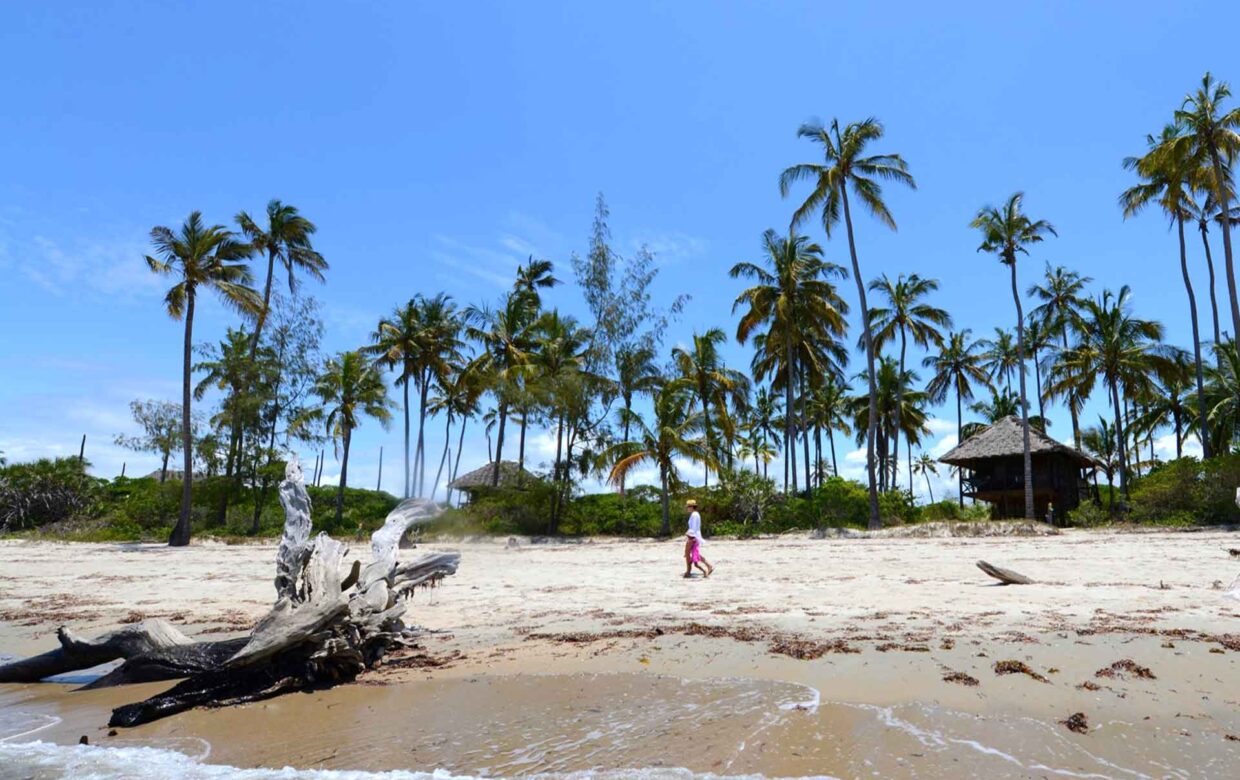
From East to West, the open ocean with coral reefs changes to brackish water ecosystem characterized by mangrove forest, salt pans and bare saline areas. Further inland, the Wami River is the most important fresh water source beside numerous temporary rivers and dams.
At low tide the sea retreats up to 100 metre to form a convenient passage for local people and wild animals. These beaches are the only place north of Dar-es-salaam where sea turtles still come to lay their eggs. The most common species is the green turtle, the largest of the hard-shelled sea turtles. Beside nest thieves on the beach, turtles are particularly threatened by commercial fisheries and water pollution. The marine extension of the park includes the Mafui sandbanks, whose colorful coral reefs are important breeding sites for many fish species.
Evergreen mangrove trees grow in the transactional zone, just above the mean sea water level. These salt tolerant tidal forests provide a resting and feeding place for many bird species, bats, monkeys, hippos and reptiles. Numerous species of fish such as prawns also lay their eggs in these protected habitats.
The high demand for the resistance mangrove wood leads to over exploitation, making the protection of these forests even more important. In Saadani National Park, large mangrove forest grows along the Wami River. This is also the place where large groups of hippos can be observed. Nile crocodile also live here. The Wami River is a very good place for watching birds such as kingfishers, fish eagles and many species of wading birds
SAVANNAH
The humid savannah of Saadani National Park can be divided into three easily distinguishable types: tall grass savanna with herbaceous cover growing up to 2m and scattered palms, short grass grazing land mostly situated on former sisal plantation and black cotton plains where the clay soil creates particularly harsh conditions.
Different degrees of tree cover can be distinguished: typical for Saadani is Acacia Zanzibarica with its long spines, which cover large areas of the park. Inhabitants of the tall grass savannas are the buffalo which weigh up to 850kg and several herds of hartebeests can be observed grazing in Saadan National Park.
The common waterbuck occurs all over the park area. Weighing up to 270kg these grazers can be easily recognized by the white ring around their tails. The density of reedbucks is especially high in Saadani National Park, although this medium-sized antelope (45kg) might be difficult to spot in tall grasses where they lie down for shelter. Warthogs are omnipresent and even come into Saadani village. As most of the villagers are Muslims, warthogs have learned that they will not be harmed.
The tallest animals in the world and the national symbol of Tanzania, giraffes, are numerous in Saadani National Park .Their tongues have special callus plates which make them particularly well adapted to browse on spiny acacia trees.
Large herds of white-bearded wildebeest graze in the short grass savannas. They were released in the area in the 1970’s. Other introduced species are plains zebra and eland.
The lion, the largest of the African carnivores, is also found in Saadani although it is rarely seen. At night you may hear the hyenas and encounter genets, porcupines and civets. Other species which can be observed within the perimeter of the park are bushbucks, bush pigs, yellow baboons and vervet monkeys.